18 August 2010

SIGNING AT THE CHURCH

Every single church and priest have their own policy and in Great Britain most especially. Or let's say that the Church of England has a very versatile and strong position regarding Photography compare to what we can encounter elsewhere. There are some good and bad sides as always.
The first advice I would give the photographer and the couple to be is to ask beforehand what the policy is. Each policy is very peculiar to the Father, or Priest in charge. There is no common rule across the whole institution. Each priest applies his/her own view on the matter. And each person has a personal experience and will let the photographer move and flash according to the space allocated or permitted, according to the couple's personality or according his/her ethics.

The first two pictures are from the same wedding. The first one depicts the father of the groom who happens to be also the groom's witness and he is signing. As usual I did ask the Father to introduce me to his policy and he clearly said that photographs of the signings had to be posed. The trouble here is that most of the time the witnesses cannot be captured because of that policy.
I therefore agreed before the service started and got closer to the table where the parents and couple were gathering as they were signing one after the other. The trick is that you can pretend to photograph the other people has the priest is focused on his duty with the witness. But in fact you can steal quickly one or two shot while he is busy working. After pressing the shutter release I turn my lens in the other direction to pretend that I paying attention to the other scene. That trick is actually quite easy to achieve especially if you are working with digital. With film it becomes a bit more tricky as you really need to have decent light in the church in order to photograph without flash otherwise the priest would be definitely aware of what is going on.

The second photograph is the formal one the priest asked for. But most of my customers don't really like it to be frank. But as long as you know both the score, there is no one to blame and you play the game.

The third photograph is the sort of setting which is perfect for some sort of compromise between reportage and formal style. The space you are in is flexible enough to try different angles and to have some distance. It is a classic shot, but a honest and direct one. A bit of flash with the real actual signing in process.

Sometimes the atmosphere is very friendly and the priest is very open to any sort of pictures as long as it doesn't take too long. So if you place yourself ideally between the couple and the parents you can not only capture the signing properly but you can also catch a wide range of portraits and emotions between the two sides. Here the groom as he sits down.


Then he kisses his bride. Not posed, they really wanted to kiss. Do not forget that most of the time a piece of music is being played while we are signing. If the music has stopped for quite a while and you are still taking pictures, you are in danger zone. And the priest will let you know. Learn to be as efficient as possible is those mini moments and macro spaces, and work in order. Formal and important ones first, more creative and subtle in between or at the end.

The photograph above was a hard one. The couple did ask the priest what was his policy and we knew that pictures were quite restricted but we were not really ready for such a harsh line. He basically said no pictures at all during the whole service. Except a couple of formals with the couple signing. So, no walking in, no walking out, no long lens, nothing...I therefore kept my patience and tried to gather few shots before the bride arrived. I then sat at the back of the church to see how the priest behaved. As we approached the signing I walked towards the registrar and made sure my flash was not on and waited for the priest to be busy doing something else. I shot...and he heard the click of my film camera, and said quite loud " No pictures I told you, behave yourself or I will have you out !" The best is those situations is to play stupid. Do not try to make a point or to be right. This is a religious site for someone's wedding. We do not care if you are right or wrong. I just excused myself and said I misunderstood what he meant before the ceremony started. I then took the formal ones as planned. We got a bit of tension, but I got the picture the couple wanted.

In some cases the priest will try to intervene in your job. As an illustration I just show the hands of this priest while I am photographing the actual signing. But in some cases the priest is standing in front of me in purpose. In fact, the whole trouble comes from one's interpretation. When the couple ask if I can take pictures, the priest will always say yes. When I turn up at the church it is a slight different story. The priest indicates me where I have to stand and not move. Tells me what I should photograph and when. Sometimes the whole situation is a bit strange. Give a big smile, be nice and patient and make most of it.

Flash is always recommended as you do the formal pictures of the couple signing. It is important to use it to get the sharpest image possible but also to show off. Meaning that the parents always expect from the official photographer to have some professional equipment to be displayed and the pro flash is a good tool to make that statement. But also take as many atmospheric ones without it especially if you are working with digital. Try not to forget the witnesses too.
To conclude I would say that most of this sort of picture is very precious to the parents such as the formal group ones. You cannot afford to miss it. They are not really creative but they have to be dead right, perfectly composed and lighten up, and with good expressions. And you HAVE TO DO IT VERY QUICKLY as you have to get ready for the walking out now. No rest for the pro! Maybe 5 minutes in 3 hours time...if you are lucky.

28 July 2010

PORTRAITS AT WEDDINGS


There is no better place than wedding for taking great portraits. Why ?

- The bridal party is mostly focused on making the big day a perfect one and therefore they have little time to allocate to posing (in my style of photography especially). They fully rely on my experience to capture the expressions as the day goes by. Which is great because the best portraits you can get are the non-posed ones.

- My fluid and honest reportage style makes the couple concentrate on enjoying the day as if I wasn't there and that is why they choose my approach. Being a good wedding reportage photographer is like being a third eye. You have to know a little bit about the couple beforehand in order to enter the event like if you were part of the audience. Too many photographers only turn up on the day and make people feel uncomfortable, not only the guests but most importantly the bridal party. You cannot expect having a lot of great portraits if you sort of gate crash a wedding even if you are the official photographer. By meeting the couple beforehand and explaining your work you will diffuse an aura which will be know by quite a few people before you do the job. To know as a couple that you hired someone special will make your task much easier and beneficial.

- I mostly use an 85mm and 105mm for my single portraits. I do not believe that you can take great portraits either if you are too far or too close from the subject. Those two lenses are perfect to enter circles without being intrusive. They also help to isolate the subject from the background if use at 4 or 5.6 aperture. Use the blur effect created from the semi long lens to create some distance in order to isolate the subject. I personally love the 50mm and 35mm but they are more for situations. You can still take some great portraits though with a 50mm depending on the situation.


- But what makes a good portrait after all? Adequate equipment is required of course, but what matters ultimately are you eye, your brain and social understanding of human behaviours. You can obviously guess what sort of reactions will emerge from such and such traditional format but there numerous opportunities that are simply unrehearsed and genuine. You have to understand how people relate to each other first. That step should anticipated from the prior meeting with the couple who will tell you or express a sentiment towards their closest families. Then you have the close friends who will gather automatically haven't seen each other for a while. You can also sense the moods from each table walking around in the first 15 minutes of the seat down dinner. I have a tip for that. I usually walk around and pretend to shoot by pressing the flash independently if I use film, or by just wasting data with digital. After that first procession people will understand that you will be taking photographs while they are eating, they know the score. Later you will see them being aware of the situation and most of them will play the game by being natural and at their best. That way it's already half of the job done. You only have then to scan the diner area and have eyes and ears in you back to know what is going on at any time.


- When I take pictures during diner I always position myself in the way that I can photograph from 2 or 3 different angles to capture different situations and people. While I wait and try to portrait someone form whom nothing seems to appear I can hear a giggle in my back. I know that the second person is in my sight despite facing opposite direction. I a split seond I turn around and capture that person without her noticing. By doing so you usually impress people for being so quick and generate expression from your first subject which you can then portrait by coming back to your first position.

- Taking a portrait can be a game of mouse and cat. Some people hate having their photograph taken and they let you know it in a blink of an eye. Personally if I know that such person is not so involved in the wedding by being a stranger almost I will give up after three attempts. If the person if important to the story if will do my bets to understand her weakness and to capture her when she expects it the least. Beauty is in the vulnerability after all, when ll the barriers disappear and you feel naked. Some people would say it is being intrusive or misplaced, I would call it beauty.


- By tradition people related to a good portrait when it shows an old or young person. I would say it is easy because their appearance expresses nostalgia in the wrinkles of youth with playfulness. I do take those portraits of course but they are quite easy to get as the first group knows well about what it means or inspires, and the second one is always doubtful and shy. In both cases there is an established dialogue we could long discuss about, but what matters to us here is what is in between. Between 15 and 60 you will find it a bit more difficult to get a grip because there is a sort of wall in general, there is misplaced competition. But it is up to the photographer to make people feel at ease. You have to express by your attitude that you can somehow understand each individual and capture a sort of essence. And you can only do that if you love social/reportage photography and if you have compassion. If you treat your subjects like numbers, you will never get anywhere and every wedding will look the same - distant and uninspired.

22 June 2010

JEWISH WEDDINGS


I love working on Jewish weddings. They are rich, emotional, traditional, fun and sweaty! The pictures I am showing are from lovely Rose and Jeremy in London. The preparation doesn't necessarily involve bridesmaids but the very close family. There is usually some kind of tension whether it is silence or chaos. The act of marriage in the Jewish culture is something very serious despite couples looking quite relax about it. While the bride is getting ready, the groom goes to the synagogue and has his own ceremony with his ushers, parents and rabbi.


As the guests starts arriving they are being asked to sit genders apart, one half sitting opposite to the other. Whether before, during or after ( all depending on the synagogue facilities) the bride enters discreetly a separate room with her relatives. The groom has to leave the guests and invites his ushers to join him on his way to his bride to be. This ceremony is called the Bedekken and consists in recognizing and acknowledging that the woman here present is the one he accepts to marry. She usually wears the veil as he walks in, and he has to unveil her face and to agree to the rabbi that she is the one. They then walk into the main hall of the synagogue leading the procession and the whole bridal party in between the male and female sides.


They finally arrive at the chuppah which is the tent displayed on a large alter where the couple and parents of each side will gather to proceed to the core of the ceremony. It starts with the walking in circle 7 times around the groom, exchanges of vows, drinking of wine and breaking of glass by the groom. They then sign the traditional registrar with the Jewish calendar. In some occasion like the wedding presented today the couple will walk to an opposite altar which will be open only to them when they can see their future or the unseen, that's what happen here at Bevis Marks in the City.


Then we proceed to the reception. Group shots have to be performed in a military efficiency. Those are highly important more than in any other type of ceremony. You have to be sharp and bossy. When you are done with the groups and the couple shots, the MC will ask the guests to seat down as the couple is preparing to make a special entrance. And contrary to other cultures we start here with dancing and the chairs. The groom and the bride will be taken apart and be sat on a chair that will be elevated in the air. Each gender group will try to make the sitter sick somehow and will then produce a sort of dance in the air between the bride and groom. Once they had enough, they come down to the floor and dance with their mates. The boys can be quite excited and virulent! that usually last for 15/20 minutes. The you get called for starter.


Depending on the families and traditions but sometimes guests are being asked to dance between each course. Speeches will be performed in a traditional way, and toasts to the Queen are quite a standard. You also have a traditional ceremony where a glass is being praised and passed across key members of the congregation.


After all those traditional bits and the cutting of the cake, you have finally the first dance and the big party. The dancing usually never stops until the band calls the last score. That will be a final dance with all the guests making a circle and crushing the couple in a tremendous final.


As a photographer you have to be utterly prepared and confident. You also have to allocate responsively your time between creativity and formal needs, the formal needs being here a priority. There is no time for rest if you want to do a great job, but all the materials are out there to make it look great. Jewish weddings are the ultimate test as a wedding photographer and I love them!

6 June 2010

VALUE AND PRICE


Photography and especially digital photography is so available nowadays, so democratic. Whether you are an amateur or a professional, an relatively affordable investment is all what you need to take pictures. No need to know about the different films, the papers, the labs. No need to know about the basics of photography such as lightning, exposure, bracketing, frame while you shoot. The technology has improved so much that cameras and softwares make your life easy. No need to ask for a graphic designer to do your website. You can do your own blog for free and many other companies propose templates that you can have control directly from your desktop. Well, as you can imagine it is not something I am fully supportive of. Don't get me wrong, I completely agree that progress makes our life easier and enhance somehow the average quality of what's on the market. I use the term here somehow because this is what we perceive, or I shall say what the technology aims us to feel. But in fact, that technology doesn't really deliver and only pretends.

By leveling the mainstream it does so by the bottom. Everything looks pretty good on surface. It takes someone with knowledge about the medium to understand what lies behind. And obviously the whole idea of presenting portfolios or highlights has never been the best way to truly understand the talent. Folios, websites and others only present the best stuff which is fair enough if you are specialised in food photography, design, landscapes, etc...photography that requires time on one specific subject at the time. But when it comes to reportage you need to approach someone's work in a completely different perspective. It has to be good, creative, personal and consistent, not to mention the photographer's personality on the day. And that is something you cannot see from a website really. Most photographers would show you one truly great shot of one particular wedding and would move on to the next wedding. To my opinion this is not being honest. But this is what our societies have been driven for decades now. As little people have knowledge about the trade they get excited about the flashy bits. And on their wedding day or after this is a very different bitter story. This is what is happening for the last two years especially.

The recession came on, the digital quality increased and ways of promoting become almost free, therefore everybody wants to be a wedding photographer as there is little work left in other industries. Because wedding photography has never been taken seriously from the professional milieu, all sorts of amateurs come in and lower the dedication and quality.
I was an amateur too 10 years ago, but I studied in the best schools and worked in the top environments dedicated to outstanding quality. And when I started on the market I had a certain experience about the trade from its history, lab, computer, studio and street photography. I just had to put all that into practice. And I always reinvent and diversify my projects to keep my wedding practice fresh and creative. All that dedication, whether it is photography or graphic design, architecture, cooking etc... deserves a certain salary. Because your passion is your life, and it keeps on expanding, and you keep on improving.

Today everything looks the same. And amazingly a lot of stuff looks truly great. But if you know how to read an image like I have been taught, you realise that most productions out there are fake. Most photography and wedding reportage included is heavily retouched. Most photographers nowadays rely on the retouching to make their visual look appealing. A good journalist should be someone who doesn't almost touch the photograph. Look at most website and you see some kind of ideal world, clean, pure, isolated like in a bubble. This is not real life. Our lives are messy, contradictory, complex, certainly not perfect. But this is the wedding photographer's duty to capture the essence and beauty of each event within that chaos. We have to try our best always and remain invisible. I see reportage photography like being a juggler. You know the pattern and you know the tricks, everything can collapse at any time and you always want to add this extra ball.

To aim at delivering consistent quality and quantity is a risky game but truly exciting. This a lot of hard work and practice - practice is the secret - nothing new?! To handle your camera to a point that it becomes invisible to even yourself, that it becomes a simple eye extension is the real price that people should be aiming at. To capture an emotion, a tear. Being at the right place...has nothing to do with devices and technology but it has to do with your eye, your brain and your experience. You can show me the most amazing landscapes and venues where the couple is standing straight tiny in the middle, you can show me crazy effects from the flashy to the soft poetic, that doesn't turn me on. Effects are here to disturb to attention and to hide that the material is actually not so interesting. In true reportage there is no trick, no effect. Not true in fact there are some, but they are set beforehand, a split second while dancing with the action in order to immerse you in the best possible way, but never after. To manipulate after shooting is simply not right in a reportage term. This is personally not the way I understand this genre of photography. By doing so you simply prove that you missed the shot, you missed your intention and have not much to say, and you try to cover it up.

As we can see a photography doesn't cost much anymore. Compare to few years ago where a certain investment, raw dedication and time were needed. A decent camera, a zoom lens and a computer is the minimum required nowadays. In fact you could actually say that we are all photographers. But unfortunately we are not. Like any other trade, quality has nothing to do with the tool used but with the brain who is in charge. Because this brain will take you much further than any tool. And scientist are here to remind us that fact.

PHOTOGRAPHY DOESN'T COSTS ANYTHING ANYMORE, BUT GREAT PHOTOGRAPHS ARE PRICELESS BECAUSE MONEY CANNOT REPLACE THEIR MAGIC. THEIR TRUE VALUE LIES ON THE EMOTION CAPTURED IN THE EPHEMERAL, SOMETHING THAT CANNOT BE REPLACED, LIKE ONCE WE WERE YOUNG.

6 May 2010

PATIENCE, EXPERIENCE AND UNDERSTANDING


For many years now magazines have been giving tips away to couples about wedding preparation. The area that concerns us has been widely described and keeps on changing due to the new technologies and therefore clients' expectations of the final product. You would expect magazines and editors to be on top of that subject as it is the primary matter they are working with. But... you would be surprised to realise that most people even within the industry cannot read an image, and/or do not consider it as a art piece and performance. The trouble is that digital photography has enabled the novice to feel like a pro. Whether you are working with film or digital, a good photographer remains a good photographer. Usually people who have the film background find it easy to move on with digital to push it further. And the newcomers who start with digital find it too easy to handle and therefore become lazy. When I mean lazy, is that they actually spend endless hours retouching and making it look amazing, but the truth is that the emotion and content has never been within the frame in the first place.

To take great pictures has nothing to do with your equipment, but it's down to your eye and your brain only. You cannot recreate a tear and the facial expression that comes with it with software manipulation. You have to be there, in the waiting, observe, apprehend and capture it. Old style you might say, but that is the only way with film or digital. That has nothing to do with technology.

I always find it surprising that images have been the original way or communicating (caves) before we started writing, but still most people cannot actually understand what lies behind. To be honest, as an image maker, after years of experience you know how to translate an emotion. It is a training like any other based on human experience. If you want to be a wedding photographer you want to produce as many images with meanings. To photograph a moment means to transform an event into an exhibition or a contemplation, a mirror effect. That takes years of knowledge and empathy with your subject to control. You cannot pretend being a good wedding photographer being totally detached from it. If you do not feel like being involved you should move towards product photography. As a wedding photographer you are being involved in a unique experience where the couple completely relies on you. You become the single privileged observer working on behalf of the couple. And you have to respond in the best possible way every single time. It is a business in which you cannot become complacent. Each wedding is a challenge, this is my way forward anyway. And you can apply it to any kind of practice.

Today unfortunately, the digital may seem like it is a medium that anyone can embrace securely.
Well, more and more people bring they digital camera at weddings. And to be honest it becomes a nightmare for me as one person out of two in my pictures carry or perform with they camera. That doesn't look great really. I think a wedding should be enjoyed first as a guest. A wedding is not a fashion shoot where everyone think he/she can be the photographer. Our lives are being more and more comfortable through the lens of the camera and takes the human experience away. I find it a shame. If you ask most people nowadays how were their vacations, they first show you a hundred of meaningless pictures and don't have much to say about it because they think their pictures can translate it. The truth is that taking photograph is a real job which most people don't learn, and therefore their pictures do not relate much to what it was all about. Or I should say that in fact it completely relates to what they experienced then, meaning they took a lot of pictures...

More and more people think they understand photography and can become photographers themselves within a couple of months with a special course. I do not want to sound conservative but what ever you want to achieve in life deserves time, years of practice and passion. Too many photographers only are because of money and think they can make a good life - it is a myth!
As a freelance you battle daily for your survival and you better be passionate about it. 90% of those who claim to be photographers give it up within 2 years. And to call yourself a photographer means to me that you make a living out of it.
In fact most "photographers" are keen amateurs. There is nothing wrong with that, but people who really need a professional get confused and we end up in the mess we are now. People don't trust photographers anymore. First because they think they can do it themselves thanks to digital and also because they have been told that they don't need a professional and that a cousin who is a "photographer" can do it almost for free. That is what has happened in the last couple of years. The result - people keep on contacting me to retouch the horrendous materials, or that their photographer lost the materials or the back-ups, or that it will take months before delivery, etc...the list is endless. But the clients are also to blame for not being interested and not using common sense.

We always say that a picture is better than a 1000 words. But trust me, to take those special pictures requires special talent, not a mobile phone. Today platforms, magazines, blogs and others diffuse millions of pictures and therefore require thousand of multitasking editors who cannot be good at one single thing because they are being asked to do several at once. The more we produce, the less quality we get, and therefore the less we expect, that's as simple as that. Do you want less or more ?

9 April 2010

POSTERS TO CELEBRATE


Two limited edition posters from Format Festival are now available online.
Nadine and Tony could join your walls for a very special price.
Each poster is an A2 size with a very smooth finish.
You can frame them or glue them as they are also designed to be advertised.
One copy is £15. If you want one of each it will be £25 only. Postage fee is on top.
Every single copy has an original sticker/stamp as a proof authenticity and my signature.
You can email me at david@2exposures.com for further details.

22 March 2010

FORMAT FESTIVAL 1 year already


Last year in March my Inadequates series were exhibited in the great cinema hall on the top floor of the brand new Quad building in Derby. 24 images ( 12 very large / 12 A2's) of mine were displayed. Next door was Magnum agency showcasing their In Motion concept. You could find under the same roof Cyndy Sherman, Gregory Crewdson, David Lynch, Eric Baudelaire, Hannah Starkey, William Eggleston and many others. Wim Wenders was also part of it in a separate venue.
I wish all the best to the festival which is the best in UK. The layout, location and selection is what you would expect from a top international feast celebrating Photography. Unfortunately the attendance was relatively poor and it really somehow describes the situation in which Photography is nowadays - in serious doubt...

3 March 2010

SPEECHES AND REACTIONS

Today let's talk speeches.
Everybody has had a nice breakfast and a few drinks, and we cannot wait to hear those embarrassing stories. The traditional order of speakers is father of the bride, bride groom and best man. I have been told few years ago that apparently the father' speech is actually quite recent as the tradition would invite a speaker on behalf of the bride's father.

Speeches are the formal part that most people would see as not a very interesting part to photograph. On the contrary I would say ( are you surprise ?) This is a very special moment where all the attention of the audience is towards the speaker. Therefore you have an opportunity to capture some amused, focused, touching moments and faces. Establish a procedure of priorities to make the most of it.

1/ father of the bride: speaker, bride, bride's mum, siblings, groom, grandparents and guests
2/ groom: speaker, bride, his parents, her parents, siblings, grandparents, best man and guests
3/ best man: speaker, groom, bride, bride & groom and guests
4/ bride eventually: speaker, groom, her parents, his parents, siblings, close friends and guests.

It is important to have few shots of the speaker with various expressions and ways of framing but do not spend too much time on him as it is quite limited somehow. It is a character with a mouth opened and a background. If you can get shots including the speaker and the persons he is talking about in order to create a story line within one shot. Mind the table's decorations.
I am not someone very keen on wedding videos in general but I would suggest you to have one during the speeches as the talking is more important than the visual (same applies to the ceremony)

Once you have the formal shots in the box and covered most of the people involved in the wedding party you can allocate some time going around the tables discreetly to capture people's reactions. That's the fun part where you need to have experience to not spend too much time on one person only. After few weddings you start understanding how it works. You know when the catch phrase is about to be delivered. You need to be fast and discreet. Being tall I always have to kneel not to block the view and my knees start hurting a bit...
For the speeches you need to anticipate, be fast, shoot while listening, shoot and get the next shot or person ready in mind, be discreet and fluid, have an extra pair of eyes in your back and be physically fit. Quite a few things to know then...

11 February 2010

GROUP SHOTS


This part of the day is somehow crucial. Not the most exciting one from a photographer's point of view. Neither from the couple's I would say, especially if they are really into reportage. But we all have to make compromises and this formality is very important for the parents, the families and for the testimony. I am going to explain the basics of group photography.

A - a list of group shots has to be decided between the photographer and the couple before the wedding day. It is always tricky as most of my clients do not want that many. But I always advise them to speak to their parents first on that particular point. They usually come back to me with quite a few more than first expected. Get those groups on a piece of paper in the most logical and convenient way. Once you agree with the couple on the correct order, ask them to provide copies of the definitive list to the ushers or people who can help on the day.


B - always try to be the most central as possible in your composition. The best lens to use is the 50mm as it doesn't create distortions. Well sometimes depending of the location it is not possible but try the best you can. Be also very central related to the height of your camera. Meaning the best way to maximize neutral effect is by positioning your camera at mid-height which is usually by the belly button of your subject. This is what I am showing in the first two pictures whether it is vertical or horizontal. I only photograph a maximum of four characters vertically. This composition gives too much importance to the space rather than the characters if more people are involved. I would say that the 3/4 of my group shots are landscape.

C - always leave some room on the side when it is possible (pictures 1 & 2). Most wedding photographers use 135mm which fits perfectly standard frames or 6x4 or 6x9 inches prints. But quite often parents want to have that particular photograph in a 7x5 or 6x8 inches frame, and therefore the picture will have to be cropped. If you don't leave some room some characters will partially disappear in the process of printing. It is also best to have the people right in the middle, but sometimes the background is quite eloquent and I therefore compose with my group in the lower part of the image as shown above.


D - always have two locations for your group photographs when possible. One indoor and one outdoor. Most people prefer outside but you never know. There is no real need in visiting the venue beforehand. That choice has to be made within 5 minutes depending on where the drink reception is organized and the weather. There is no point in choosing a beautiful backdrop if it is 100 yards from the drinks reception. That will make everybody very upset and you will have no control over the fast turnover needed at this stage. Find somewhere nice, dry, convenient with neutral background. Group shots are about people not about landscapes or architecture. If you can have the two, well that's your lucky day.


E - in most cases use the flash. Feeling flash is the most useful here like the three pictures shown above . It is a very subtle technique. Get the light as if you were shooting without and set your flashgun low or mid-power. That freezes better the composition and highlight gently the skins. Especially useful when the ladies are wearing hats ( or men top hats). You can use you flash to a higher power when you are facing somehow the sun ( two top ones above). Always try though to find natural elements that can help you to soften the high contrast ( like the walls or under a tree). Then set the power of your flash accordingly ( you need some experience here I am afraid). Make also sure the faces are on a dark or medium background to avoid the flair. I got it right on the second sample as I wanted to create a effect but that's a bit risky for someone who has no real control over the flash experience ( especially in the rush ! )


F - you can also create some very subtle effects without flash while shooting. Sometimes the sky is quite grey and you have this overcast weather condition. This is perfect from a photographer's point of view. It's like a huge studio set with soft boxes. Get your exposure right and then open by half-stop or a full stop. You will keep all the details in the background and outfits, and will gently highlight the skins. Beware: this is a different story when you have to photograph black skins. You have to stick then to feeling flash photography. You can take obviously beautiful photograph of black skins without flash, but at this stage of the day it is too risky to recommend.


G - big group shots have been highly requested in the last few years. I tend to do it 5/10 minutes before the guests are called for diner. You cannot organize it yourself and really require the ushers here. You have to know exactly where the guests have to be taken to. Here again the closest to the main hall is the best. Ladies with high heels are not so keen on walking 100 yards on the grass. So old people might take a good 10 minutes to get there. Once you manage to get everybody's attention shoot quite a few times. Speak to them, make them laugh, make them interact. You will never succeed in having everybody looking at you, so don't be frustrated, that's human nature and logistics. Try to get the most important people in the first two rows and fill as much as possible you frame baring in mind the cropping issue I mentioned earlier. Once you have 2 or 3 good shots you can then announce that the diner is about to be served.


The group shots are not terribly exciting but they are elementary and necessary. They have to be performed technically perfectly and with synchronicity. Make this make easy for the couple who will have to pose for most photographs. That can be even more painful for them than for you. Keep them entertained, give them water and support, give them directions, that's what they need. You are somehow the center of attention and you have to give orders to make this part as swift and enjoyable as possible. Just say "cheese"

5 February 2010

NEW BOOK

The size in doubt
By david boulogne


New publication of my critical photography's diaries.

26 January 2010

HARD DRIVE CRASH


This was meant to happen. I was few weeks away from buying a second external hard drive. I was waiting to reach the 50% of its storage in order to purchase a new 500GB as a back up. I haven't had this LaCie d2 Quadra examined yet. It could be the cable transfer supply only, but from the few reviews I read online I doubt it. The engine doesn't seem to kick in. It is stuck. It doesn't appear on my screen either. I haven't moved this hard drive from its original place on my desk. I haven't done anything damaging to it. It has just been sitting for 2 years by my computer. No radiators nearby, well...I don't get it. As most specialists would say forget about it and get on with life.

So I would like to inform all my clients that fortunately I backed-up every single wedding on a separate medium ( DVD) to avoid this sort of major trouble. If copies are needed they are still available. I did the same with all my personal works. Unfortunately, they are few folders which are destined to books or layouts that might have disappeared. I still have the originals on a digital format, but it is just time consuming. It is unbelievable how digital makes life so complicated !

All this takes me back to what I have been warning people in my book and on this blog.
DIGITAL IS CONVENIENT BUT IT IS NOT RELIABLE AND IT DOESN'T LAST IN TIME,
it is simply not designed for that purpose.

29th January - News

I went to Micro Anvika where I bought this Hard Drive from. Their customer service has been very kind and spotted the problem in seconds. The power supply was faulty. Which makes sense. The technician showed me that once plugged in the power supply emitted a strange sound. He tried with a spare one and it worked. The sound was more stable and the drive worked. Hourrah !!! My hard drive is back to life and all my folders are safe. In the mean time I bought a small portable USB connection Petit LaCie 320 GB to copy all my my folders once back home. The USB port is obviously slower than my previous Firewire but I think it is wiser to diversify the connection mode. And this new one is easy to carry even though it will be full very soon already.
The trouble with my original 500GB is that it comes with a power supply, which is logical, but there is no switch on it. It is therefore always switched on even if the hard drive is not. And it has been this way for 2 years. No surprise then that it collapsed. The best way from now on is to unplug it after every single use to avoid this kind of trouble.
I have been reading different blogs about possible crashes and if I follow the diagnostics described I should have then gone to a specialist who would have charged me a lot of money to retrieve my datas. The wisest procedure is to try as many alternatives with different computers and to check every single lead. Even if the hard drive is stock and doesn't seem to start, it doesn't mean that it is faulty.
But in any case as I had backed up almost everything on DVDs I was not going mental and tried to use my common sense like if I had to deal with a car engine. There are many online shop where you can get very good deals and nowadays with capacities are really affordable. But I wonder what happens if you get this kind of technical problem. Will they take it back ? Who does the warranty apply to ? The supplier or the maker ? How long does it take for being fixed ? etc...
In the end I was quite glad I purchased my 500GB from a shop with a customer service. It saved me a lot of time, money and stress. In total 3 days and I didn't pay anything. Quite good I think !

21 January 2010

PHOTOGRAPHY IN BIG TROUBLES

From Oeil Public's Newsletter

OEIL PUBLIC, END OF A STORY
Dear friends,

Oeil Public photographers have made a decision to end the 15 years old agency's story. We thank you all for your faithful support.
Oeil Public was a team of independant photographers, united through their involvment. And a tool adapting to its members' practices to fight for their independance, their points of view, their freedom.
From its very first stories, Oeil Public photographers asserted their involvment to understand the world after a strong editorial line. They investigated for the press, giving priority to an in-depth approach over simple illustration.
Its photographers have permanently explored the ways of story-telling in documentary journalism. They such made Oeil Public a research lab and a united undertaking.
The press economic crisis has now made production of photo-stories impossible. Photojournalism practices have to be thought hard today.
Oeil Public is no longer fitted.

Oeil Public closes eyes today, to allow its members to keep theirs wide open.
See you soon...

Oeil Public


Very sad story for such a great collective agency. This is what has been happening for the last 10 years gradually and more dramatically in the last 5 years. I managed to meet them in Paris a year ago at their headquarters. They liked my work but they were already very concerned. One photographer member I met was very honest and told me that their future was very bleak. More or less 10 years ago the Press stopped commissioning freelancers. The new policy was to bring stories on a silver plate at your own expenses. In the last few years they stopped paying photographers or would pay very little. I had the same experience with Editing agency as they went bankrupt 5 years ago. That what happens to Opale agency too, with whom I am apparently still part of despite not having any order for the last 3 years. Even the most prestigious Magnum is suffering. Most agencies disappear one after the other. Most people don't know about those things.

We have to understand this crisis from different angles. The reasons are multiple but they all converge towards the same goal and the effects are visible in various ways.

Main reason is Digital. In the past photographers would use films. Meaning they had to learn a great deal about all the aspects of Photography. The bulk of knowledge involved meant you had to be really passionate about it and spend not only a lot of time but also a lot of your money. You had therefore a natural selection which would gratify the most persistent and talented. Because of the time, knowledge and assets provided the common people could identify someone's work as valuable. Because of digital it has all disappeared within few years.
People do not regard Photography as a skill because nowadays everybody can take a picture. You don't even need a camera. A mobile phone is enough apparently. People accumulate materials on their desktop but do not really judge or compare, they only consume. I am really astounded when I hear people's comments on their own pictures taken from their mobile. This phenomenon has been experienced every single time I do a wedding in the last couple of years. I even get pushed away by guests as they see themselves more photographers than me. The quality is going down and the expectations follow accordingly.

We have reached that bottom where Photography doesn't really mean anything anymore to the masses. Before, prints, presentation, skills were a sign of experience and people would spend more time reading the images. Consequently they would interact and understand more the value that represents a picture. To be honest a photograph ( print) has never cost much unless you are using traditional methods. But nowadays prints seem not to be needed too.
What really makes a photograph valuable is not the product really but what is behind. The photographer's skills, the emotion captured, the story telling, the honesty and quantity make a photographic assignment valuable. A photograph is to generate emotion and is produced to last for future generations. We all want to understand and see where we are from. Our parents' wedding, the face of an unknown uncle, memories of grand-parents. That is what photography is about. Well today it looks like it is not relevant anymore. We produce, accumulate, consume masses of datas which will disappear quickly. Our generation will be erased from collective memory.

Slow growing expected recession is an other reason for this drama. It works alongside digital. People overspent or spent with no assets. 5 years ago people would find an average price tag of £1500 for a quality photographer. Today I hear people expecting me to cover a wedding for £500. How can you financially do a wedding for so little ? It is simply impossible.
Photography is a very vast field where specialization is often required. I trained a lot of assistants in the last 10 years. I also proposed a lot of others to sponsor them. And most of them would refuse because doing weddings "isn't cool". I said to myself there is not point in trying to convince them that they have to start somewhere. Most networks are almost impossible to get in as the economies slowly shrank. Most of them do something completely different now or are just surviving. The wedding photography network was still professional then.
Because of the recession most areas have been shut down. Therefore one of the few left is wedding photography. So all the young photographers jump on the opportunity without any experience, skills, understanding and they charge very low. What is then the consequence ? Obviously very poor results. Couples get upset and see all wedding photographers as amateurs who do not deserved to be assigned. We have reached this bottom where people follow the Press' policy - we do not need photographers anymore !

I regularly check websites from various sources and lately I came across a directory of American newspapers where each would present a selection of the best pictures of 2009. Bare in mind that this selection is done by the picture editor. I was appalled by most of them. How can you then blame people for not being able to judge quality if papers have lost it !

Photography is the most democratic media and especially today, but to produce quality and understanding requires professional skills. This evidence is found everywhere, in all trades and will remain this way. This one human fundamental.
Do we want quality or do we aspire to vast amounts of nothingness ? This is the delicate dilemna we did put ourselves in. It's up to you, it's up to us to decide which way we are going.


7 January 2010

CHURCH PHOTOGRAPHY

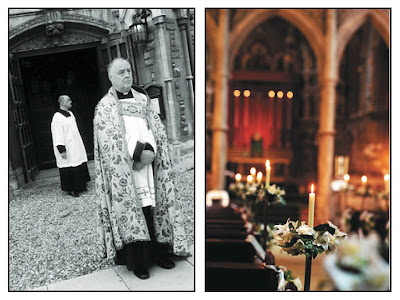
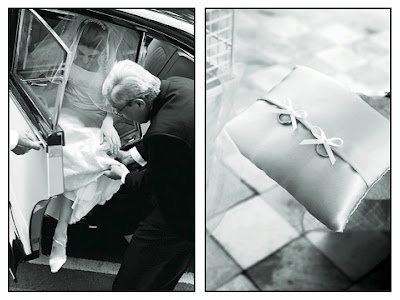
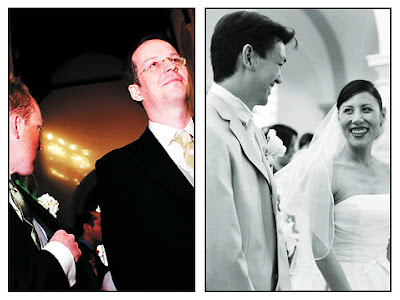
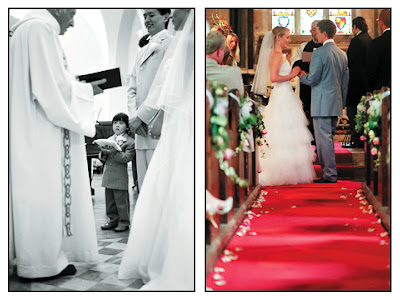
Church Photography is the most important part of the day for many reasons. This is the core of the day in spite of our modern societies being less religious and less keen on documenting this formality.They are a lot of creative shots available online but the truth is that most of the time you have to stick to a rigorous agenda if you want to capture all the elements that make a church ceremony complete. The diptychs shown are a compilation of old weddings assembled in a sort of chronology. This presentation does not cover fully, but it gives you a certain narrative of the exercise.


1/ BEING ORGANIZED / POLICIES

Most churches of England run a wedding ceremony for 45 minutes. Catholic churches usually run for 1 hour, and Protestant churches somewhere in between the two. There is no national or international rules regarding the wedding photographer. It is up to the vicar in charge.They all have their own policy. You should ask the couple to ask him about the policy. Keep in mind that most vicars will make it sound like very easy and open for the photographer. But in fact what they tell the couple is often different to what actually is permitted. So ask the couple to be informed themselves on that matter and have yourself a word with the vicar before the ceremony. Some of them want you to come to the rehearsal the day before the event. If you are local to the wedding why not, otherwise you have to gain experience and play it by ear very on the day. But that's what reportage once again is about, it's about being reading in all possible circumstances. After years of practice I do not feel like going to the rehearsal as I know exactly what is going to happen. Most churches are the same and I know the procedure. Ask the couple to give you an order of service or pick up one before the bride arrives.
It is very important to follow the rules of the place as some priests are very fussy. Trying to be sneaky in order to get better shots can be very damaging to the general atmosphere of the event. Some priests are very tight and can actually make a loud complaint while directing the ceremony. Most of them have had very unpleasant experiences with non respectful or amateur photographers and they will warn you from the start. You are usually not their friends and it is up to you to make them believe otherwise but being discreet and available.


2/ FIND YOUR MARKS

Depending on the contract that bounds you to the couple you might just turn up with or just before the bride, or you might be asked to go straight to the church where the groom, best man, ushers and guests are arriving. In both case I always try to visit the church quite in advance in order to understand the layout inside and outside. Some churches present a very peculiar design where entrance and exit are not the same. You also have to check the lights (natural and artificial). You have to check if there is a balcony where you can take a general shot from above, trying not to be in the way of the organist if he/she performs up there. Find the table where will be signed the registrar. Understand if there are side aisles to walk up and down easily. In a lot of churches you will be asked to stay at the back behind the last row for most of the service. You need therefore to have a long lens. If you work with film I would recommend strongly a tripod, if not, make sure your digital camera takes quality pictures a high ISO. The general policy with photography is NOT to use the flash during the service especially in UK. It can be used though as the bride walks in, at the signing and when the couple walks out. I personally like this policy which makes me unobtrusive. It is up to you to find the right way to cover all the angles and emotions despite the limited access to your subjects.

3/ GET INTO THE MOOD

The groom, best man and ushers are usually the first ones to turn up. That is their duty to check that all the flowers arrangements are displayed as planned. They have to put some signs to prevent the guests to sit on the front rows accredited to the close families. The ushers have to distribute the orders of service to the guests now arriving and leading them to the right side they should sit on, etc...The groom gets nervous and the best man has to calm him down. This part is quite interesting for me as there is a real sense of happiness and building tension combined. Try to get as many details of the flowers, orders of service, the church as a building to have a sense of environment and weather conditions, guests arriving, outfits, buttonholes, people chatting, ushers performing, groom tensing up (bride being late),...Make sure that you spoke to the vicar. Most importantly you have to be available anytime if the bride is to arrive as you have to capture her getting out of the car with her father, or sibling, and bridesmaids. The before of the ceremony is already a story on its own.

4 / THE CEREMONY STARTS

The brides arrives. If you work alongside a video person make sure you met introduce yourself to this person as you will have to work together without interfering. That bit is especially important as you will have to walk backwards as the bride walks in and if the priest permits you to do so. You have to be aware that you will be either in the field of the video, or will have to share the space while walking backwards. The photograph required then is very formal. Use the flash, make sure you have a couple of good shots of the bride with her father, try not to be too arty. This photograph is mostly important to the bride's parents and must remain quite traditional. Then the father gives away his daughter to the groom and the ceremony starts. No more flash ! Go back to your main base as quickly as possible and get ready. You suddenly realise than taking photographs in a church is not as easy or laid back as it seemed. They are a lot of tiny events happening and you have to find your way to tell a story with very limited access, with a solid crowd and a couple quite afar and tense or formal for most of it. Well I would advise you to read books on classical painter such as David.


5 / FIRST MOVES

First I focus on setting the scene. I stay at the back and get different shots ( horizontal, vertical, different lenses) in order to get the general feeling. Then you can move on the side aisles if permitted to understand what the space is like when filled with guests. Do not forget to remain extra quiet. But you also have to make most of it as the time spent in the church is quite short in fact. So try to get as many materials as possible from as many angles as possible before they start exchanging their vows. As they stand together, the ceremony usually start with a song and therefore it is the best time to photograph without being noticed as the voices will cover your movements. Then, they will have a first reading. If possible get a few shots in large and close ups. Then the vicar might have a word from the Bible applied to the couple. Some vicars are very close to the couple or one side of the family. I have done many weddings where a sibling was directing the service or where the priest was very close to the family especially in rural communities. In many occasions the vicar will be present either at the drink reception or even will stay for the wedding breakfast.

6 / FIRST MIDDLE PART

He/she will then proceed to the vows and the exchange of rings. At this stage you need to be extra focused and must be riveted to your eyepiece as the changes of expression will be tiny. Hopefully you might have the couple facing each other, and you can therefore see their profiles. Sometimes they are not and they keep facing the priest. you have then to find a way to capture that bit without being intrusive. Here again, that is something you should know before being in trouble. Sometimes in such situations an extra corridor alongside the nave in the shade if available for you and the video person. They hold each other hands and pronounce their vows one after the other. Then comes the moment when they exchange rings. The best man or a pageboy brings the rings either on a cushion or simply taking them out from their jacket. That bit can only be focused on the people as the ring will be almost invisible in your shot. They kneel and get protection from God. They might straight after that kiss - be ready ! Or they might not, but be ready it will be quick.


7 / SECOND MIDDLE PART

Now there is less pressure and the couple is more relax. They might be asked to walk more into the church to a further altar. You then need a very long lens depending on the size of the church. They might get their protection from then. Or the vicar might orate the prayers. Some guests might be invited to orate the prayers to, followed by the congregation. Every church is different. The best is to obtain an order of service. At this stage make sure you are ready for the signing and have your flashgun set up. The priest will announce that bit and the close families and sometimes the bridal party is invited to join. If a second hymn is being sang before the signing, use that time to pack your tripod back into a bag while they sing. Here again your movements will be covered by the hymn.

8 / SIGNING

Make sure you know beforehand where you are going. Also think how you have to get there, meaning if the signing takes place in a separate tiny room you might have to be there right after the priest and couple and before the families. It's all about maximizing your space and timing. The first bit of signing is usually quite formal and many priests will ask you not to photograph them signing for legal reasons. Use that time to photograph the other people in the room or space and the general ambiance. Sometimes you are given the opportunity to take pictures as they sign the actual document- every church is different. Get images of the witnesses too. Then the couple will leave the table and get an embrace with their parents - try to get those pictures ! At the end of the signing the priest will have to sign too all the documents and will give either the groom or the bride the legal document. Many priests want you to capture this formal act. Find your own way to make it look interesting.


9 / READY FOR DEPARTURE

While we were busy signing some kind of entertainment has been performed for the congregation. You will be the first one to leave the signing bit to be ready for the exit of the newly weds. Make sure your equipment is packed beforehand and that your flash is adjusted. The ushers should have the duty to open the doors of the church( but they never do). The families rejoin their seats. The vicar announces the couple, and there they stand facing all of us. The organ starts its finale and they walk towards you. Here again you must walk backwards. Try to get 2/3 formal shots with the couple right in the middle, then use your personal flair. It is really important to have them smiling, interacting with guest or with each other. As they exit the church most couple will stand and kiss in a very formal way. Take a couple of snaps. It is very formal. They might not be the most exciting shots but they are vital.


10 / FINAL NOTE

To take photograph in a church, or temple, or other is about capturing correctly the standards.
If you feel that you are doing well you can then use few minutes to be a bit more artistic. But the creative mustn't take over the formal at this stage. In the end being a wedding photographer is about capturing the wedding ceremony, it is not about the getting ready or kids pictures. To take pictures in any kind of religious places is like joggling with fire. You never really know what's around the corner. So get as many of the standards as you can in a perfect way, and then have fun. Also try to see the church bit as a devised performance, it's like theater really.
Important last note: believe me or not but some thieves operate in churches during ceremonies and especially in London. Always keep an eye on your belongings. I had a camera and flash stolen few years ago in Sloane square area and fortunately there were no shots taken on that roll. I noticed a month later a couple of strange individuals ready to act again in Fleet Street. If materials or equipments are lost or stolen, this is your responsibility. To cover those misfortunes you HAVE to have an insurance.

Do not hesitate to contact me if you have questions.